
New York has everything. More industries, cultures and ideas within a subway ride than anywhere on earth. Scientists, painters, engineers, writers and founders, all a few stops apart.
So why is it so hard to find your people here?
You go to a panel. You go to a mixer. You trade a few business cards and hear a few pitches. In a month you might meet thirty new people, and know none of them. You're surrounded by interesting people, and somehow you're still eating lunch alone at your desk.
We call it density without depth. It's like starving in a supermarket: every ingredient is on the shelf, and there's no kitchen.
The room we lost
“It's like starving in a supermarket: every ingredient is on the shelf, and there's no kitchen.”
Think back to college, if you went. You didn't have to plan your friendships. The same faces showed up in the dining hall, the library and the late-night argument in someone's room. A physics major and a poetry major could end up building something together, because they kept running into each other.
Then you graduated, and that ended overnight.
For most of history, adult life had rooms like that too. Congregations, clubs, unions and neighborhoods gave people the same faces every week. Most of those have thinned out. In 1999, seven in ten Americans belonged to a church; by 2020 it was fewer than half. Between 2003 and 2020, the time Americans spent with friends fell from about an hour a day to about twenty minutes.
Screens filled the gap, and they're great at what they do: spreading news, ideas and opportunities. But they don't carry the things that make people close. A voice, a face, a shared meal, an evening that runs long.
What's left for professionals in New York tends to come in two shapes. Some things are open but one-off: mixers, panels, festivals with a thousand events in a week. Others repeat, but they're closed: clubs with big fees, waitlists and status filters. Almost nothing is open, recurring and honest at the same time.

Why curious people feel it most
If your interests are a little unusual, the gap is wider. The people you'd click with are scattered across industries that rarely meet. Your workplace sorts you in with people who do exactly what you do.
And most rooms reward fitting in. Bring up a strange idea, a side project or a cuisine nobody has tried, and you can get a polite smile and a change of subject. After a while, a lot of curious people learn to keep their curiosity to themselves.
What they need isn't more people to impress. It's a few people willing to try things with them.
Why the room matters
This isn't only about feeling less alone, though that matters. People with strong social ties live longer; the effect is about as large as quitting smoking. Friendship also takes time. It takes roughly 50 hours together to become casual friends and about 200 to become close. No group chat gives you those hours. A room you keep coming back to does.
It matters for ideas too. When people feel known and safe, they have energy to explore, take risks and say the half-formed thing out loud. Great thinkers almost never work alone; they come in circles of friends, critics and rivals. Children who grow up around inventors are more likely to become inventors themselves. You are who you're around.
Here's the catch: you can't get there by aiming straight at it. Networking tries to skip to the outcome (the deal, the hire, the intro) and the trust that would have produced it never forms. The good stuff comes later, and sideways, from people who actually know each other.
So we built the room
“An event is something you attend. Cohort is something you belong to.”
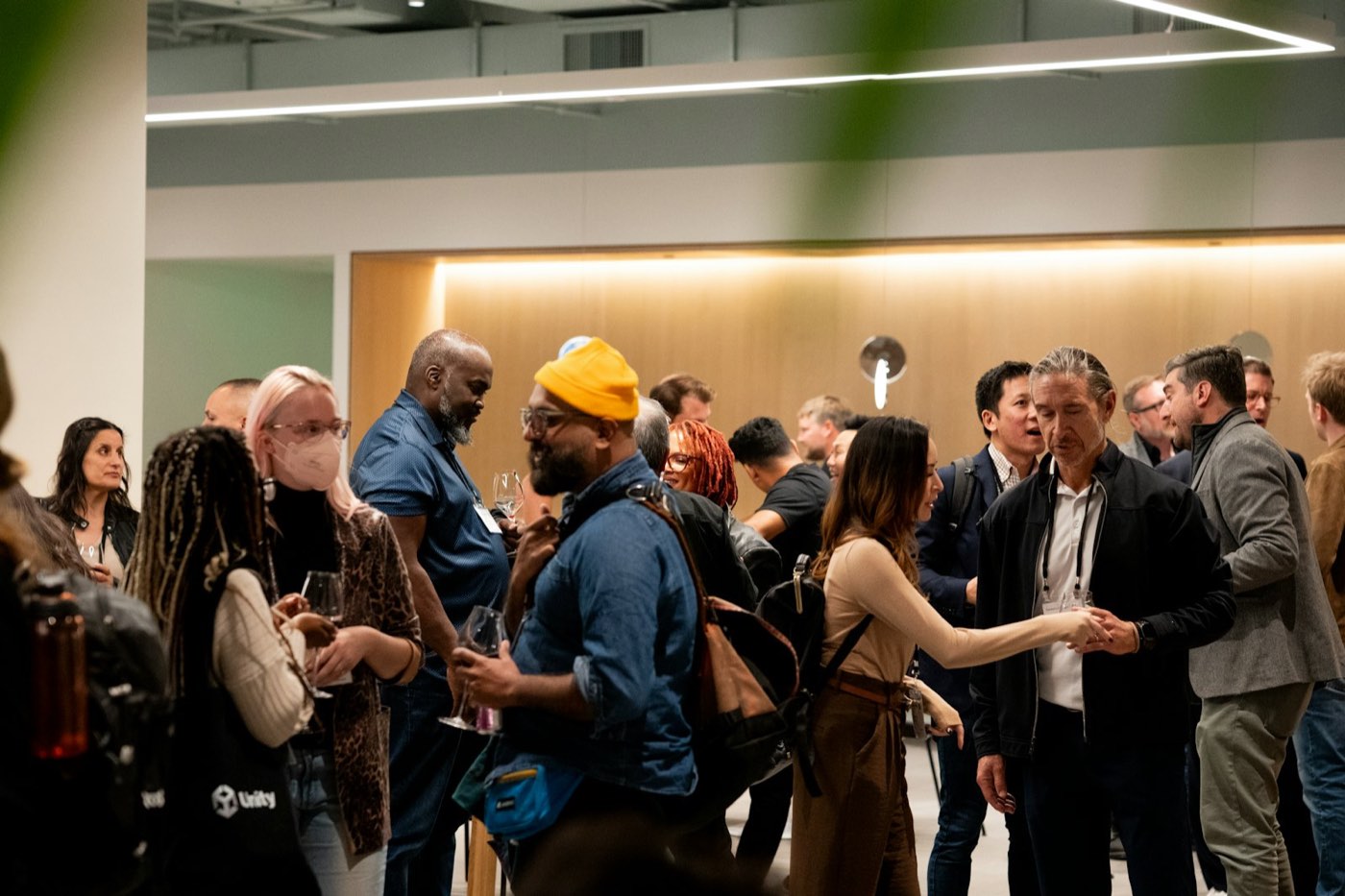
We started Cohort in 2024 because we wanted something better, and it took off in 2026. It's a recurring community in New York for people who think deeply and want to build things that matter, and for the people who back them, challenge them and think alongside them.
Here's what that looks like:
- Coworking. Bring what you're working on. Leave with feedback, a few new names and something finished.
- Idea events. Open talks, salons and group discussions where we talk with each other, not get talked at. Ideas spread, and so do friendships.
- Socials. Dinners, walks and nights out across the city, where we try new things together.
A few things make it work:
- It repeats. The same faces, again and again, until strangers become friends.
- It's open and free. Every Cohort event is free. Connection and the spread of ideas are too important to gate, and a gate would narrow whose ideas are in the room.
- It crosses fields. A biologist, a painter and a founder at the same table is the point, not an accident.
- It's honest. We'd rather be known than impressive. Bring the side project and the question you can't answer yet.
- It's not networking. Nobody pitches. We ask what you're working on, not what you can do for us.
What we hope happens
First, people are known. Then ideas start crossing between fields while they're still forming. Then some of those ideas become companies, artworks and stories that could only have started here. Do that enough, and New York becomes a city where building things together is just what people do.
Come once
You don't need to know anyone, and you don't need to be building anything yet. You just need to be curious and to show up.
Subscribe to the calendar and we'll see you at the next one.